
How to Help Kids Memorize Bible Verses Without Making It Feel Like Homework
If you are trying to help kids memorize Bible verses, the hardest part usually is not choosing the verse.
It is keeping the practice from feeling heavy.
Many parents, homeschool families, and church leaders want Scripture memory to become a normal part of life. But when the routine starts to feel like one more assignment, kids often tune out before the verse has time to stick.
That is why the method matters. If you want to help kids memorize Bible verses in a way they will actually return to, the goal is not pressure. The goal is a rhythm that feels short, active, and repeatable.
Why kids lose interest in memory verses
Most children do not resist Bible memory because the verses are unimportant. They resist because the format can feel too static.
A routine starts to break down when:
- the practice feels too long for a child’s attention span
- every review session looks the same
- the child is only rereading instead of participating
- missing a day makes the habit feel harder to restart
This is often the hidden problem behind the search for Bible memory verses for kids. Parents are not only looking for the right verses. They are looking for a way to practice those verses that feels easier to keep.
What helps kids memorize Bible verses more naturally
Children usually remember more when Scripture practice feels active.
That does not mean making the Bible less meaningful. It means giving the mind something to do while the verse is being repeated. Attention gets stronger when kids are choosing, reacting, repeating, and noticing progress instead of only listening passively.
If you want to help kids memorize Bible verses without constant resistance, four ideas tend to help.
1. Keep the sessions short enough to win
Long review blocks can sound spiritual and still fail in practice.
For many families, five focused minutes works better than twenty inconsistent ones. Short sessions lower resistance. They also make it easier to repeat the habit on school days, busy evenings, or between other responsibilities.
Good times to try include:
- after breakfast
- during a short afternoon reset
- before screen time
- after dinner
- right before bed
The key is not picking the perfect time. It is choosing a time that is easy to revisit tomorrow.
2. Stay with one theme instead of jumping everywhere
Kids often do better when verses feel connected.
Instead of pulling a random passage every day, it helps to spend a week or two on one theme such as:
- courage
- kindness
- trust
- gratitude
- God’s love
This gives the child a clearer lane. The verses begin to feel related instead of scattered, and repetition becomes easier because the mind already knows what kind of truth it is returning to.
Verse-based topics can help here because they reduce decision fatigue for the parent too.
3. Turn recall into an activity, not just a recitation
If you want to help kids memorize Bible verses, active recall matters more than endless rereading.
Active recall means the child has to recognize what comes next instead of only hearing the verse again. That could happen through speaking, arranging words, filling blanks, or choosing the right phrase under a little time pressure.
Why does that matter?
Because participation usually creates stronger attention than observation alone. A child who has to spot the correct next word is more engaged than a child who is only asked to glance at the same line again.
This is one reason interactive Bible games can be useful. They give Scripture memory a task shape instead of a lecture shape.
4. Let progress be visible
Kids stay with routines longer when they can tell they are getting somewhere.
That does not mean turning Bible memory into empty competition. It means giving effort a visible result. Completing a short round, revisiting the same topic, or seeing saved progress can make the habit feel more real.
Visible momentum helps on ordinary days when motivation is low. It answers the quiet question many kids have: ‘Am I actually doing better at this?‘
A simple family rhythm to try this week
If you want a low-pressure plan, keep it small:
- Pick one short daily window.
- Choose one Bible theme to stay with for several days.
- Practice for a few minutes instead of pushing for a long session.
- Repeat the same pattern tomorrow, even if the session is brief.
This works because it lowers friction. When families try to make Scripture memory too ambitious too quickly, the routine often disappears after a few days.
Where Verse Blitz fits for parents and families
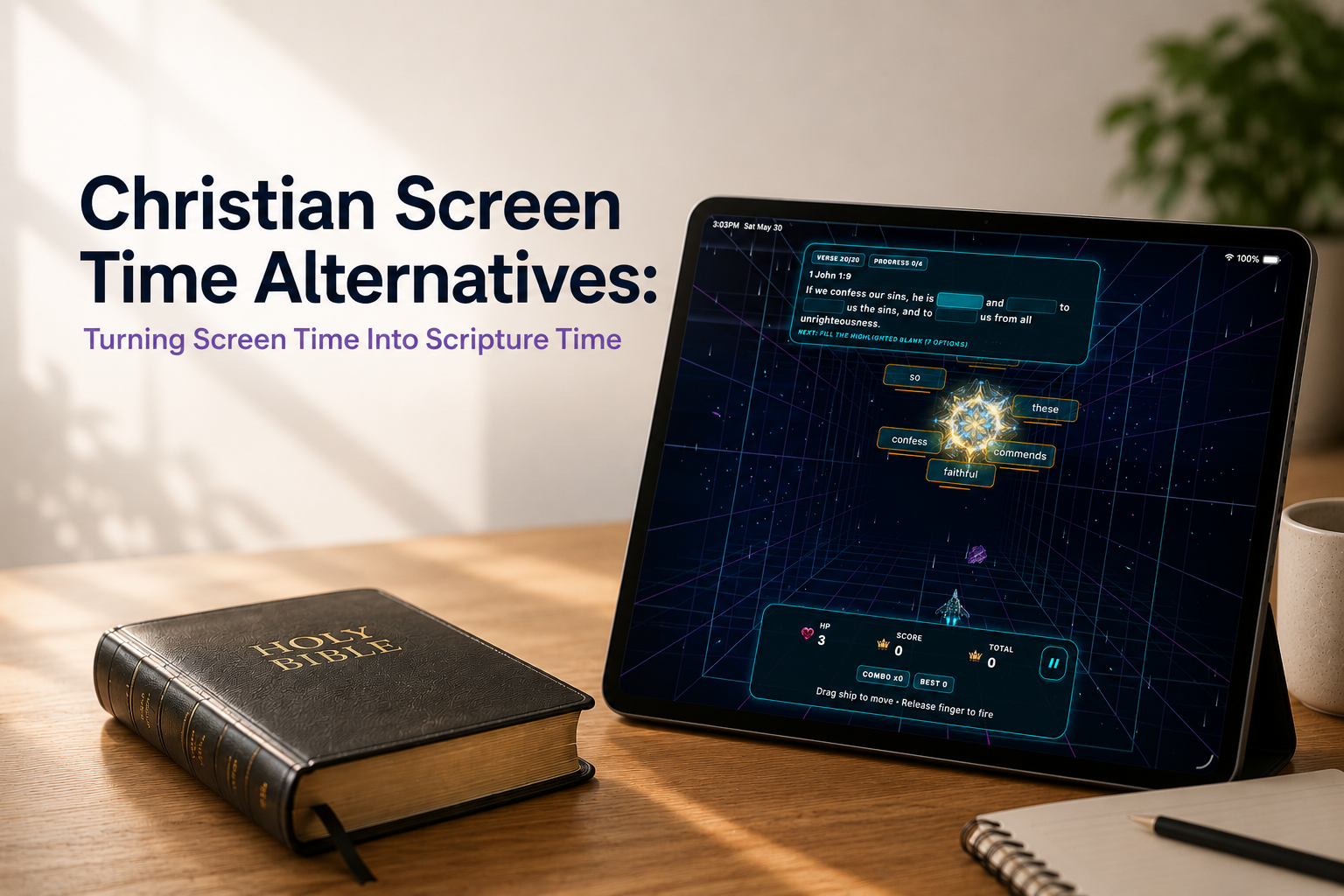
Verse Blitz is built around a simple idea: Bible memory can feel more active when the child is interacting with the verse instead of only rereading it.
The game turns Scripture practice into short arcade-style rounds where players choose the correct words in order. That format can help families in a few practical ways:
- rounds are short enough to fit into real life
- replay makes repetition feel easier to accept
- topic journeys give practice a clearer direction
- saved progress helps kids see that the effort is building over time
That makes Verse Blitz a useful fit for parents who want to help kids memorize Bible verses without making the routine feel stiff or overly academic.
It also works well for adults and teens, which can make family practice feel more shared instead of limited to one age group.
If you want a broader overview of the app itself, read A New Kind of Bible Memory App: Learn Scripture Through Gameplay.
If your bigger challenge is staying consistent from day to day, How a Bible Verse Game Can Help You Build a Daily Scripture Habit is a good next step.

How to use Verse Blitz without making Bible time feel rushed
The app works best when it supports your Scripture rhythm instead of replacing it.
You could try a pattern like this:
- begin with one short verse or theme
- play one or two quick rounds in Verse Blitz
- ask your child to say one part of the verse out loud afterward
- return to the same theme the next day
That keeps the Bible at the center while still using gameplay to make repetition easier.
Final thoughts
If you want to help kids memorize Bible verses, do not assume the answer is always more pressure, more repetition, or longer sessions.
Often the better answer is a lighter routine with more participation.
When Scripture memory feels active, clear, and easy to restart, children are more likely to stay with it long enough for the words to become familiar.
That is where Verse Blitz can be helpful. It gives families a more interactive way to practice Bible verses while keeping short, repeatable Scripture engagement at the center.
You can learn more on the Verse Blitz project page, or download the app on the App Store and Google Play.
FAQ
What is the best way to help kids memorize Bible verses?
The best approach is usually short, repeatable practice that keeps the child actively involved. Themes, short sessions, and interactive recall often work better than long passive review.
What are good Bible memory verses for kids?
Good starting verses are usually short, clear, and connected to themes children can understand, such as kindness, courage, trust, gratitude, and God’s love.
Can a Bible game really help kids learn Scripture?
It can help when the game keeps the verse itself at the center and makes repetition feel active. The value is not entertainment by itself, but the extra attention and consistency it can create.