Why a Bible Memory Game Can Be Easier to Stick With Than Flashcards
Keep CodeInFaith in your Google feed
Add us as a preferred source to see more of our latest articles in Google Search.
Trying to memorize Bible verses is usually not the hard part.
Staying with it is.
Many people start with a sincere plan, save a few verses, review them for a week, and then slowly drift away from the habit. That is one reason search interest around the phrase Bible memory game keeps making sense. People are not only looking for more verses to read. They are looking for a format that is easier to return to consistently.
If flashcards have started to feel flat, a Bible memory game may be a better fit than you expect.
Why Scripture memorization routines often fade
Most Scripture memory tools are built around rereading, tapping, hiding words, and repeating the same review cycle again and again.
That method can work. The problem is that it often depends on motivation staying high even when the practice itself feels passive.
After a few days, many people run into one of these issues:
- the review starts to feel too similar every time
- the habit gets pushed aside because it feels like one more task to finish
- attention drifts before the verse really settles into memory
That does not mean the verses matter less. It usually means the format is not giving the brain enough reason to stay engaged.
What a Bible memory game changes
A good Bible memory game turns verse review into an action instead of a checklist.
Instead of only looking at a verse and trying to force yourself to repeat it, you are interacting with the words under a little pressure. You are recognizing the next phrase, selecting the right sequence, and staying focused because the round keeps moving.
That shift matters because it changes how memorization feels:
- it becomes more active than passive
- it fits short breaks more naturally
- it gives you a reason to replay a verse instead of avoiding repetition
- it makes progress easier to notice from session to session
For many people, that is the difference between practicing once and actually building a habit.
Why active recall matters more than passive review
One of the strongest parts of a Bible memory game is that it naturally leans on active recall.
Active recall means you are retrieving the right word or phrase instead of only rereading it. In practical terms, that can help memorization feel sharper because your attention is tied to recognition and response, not just exposure.
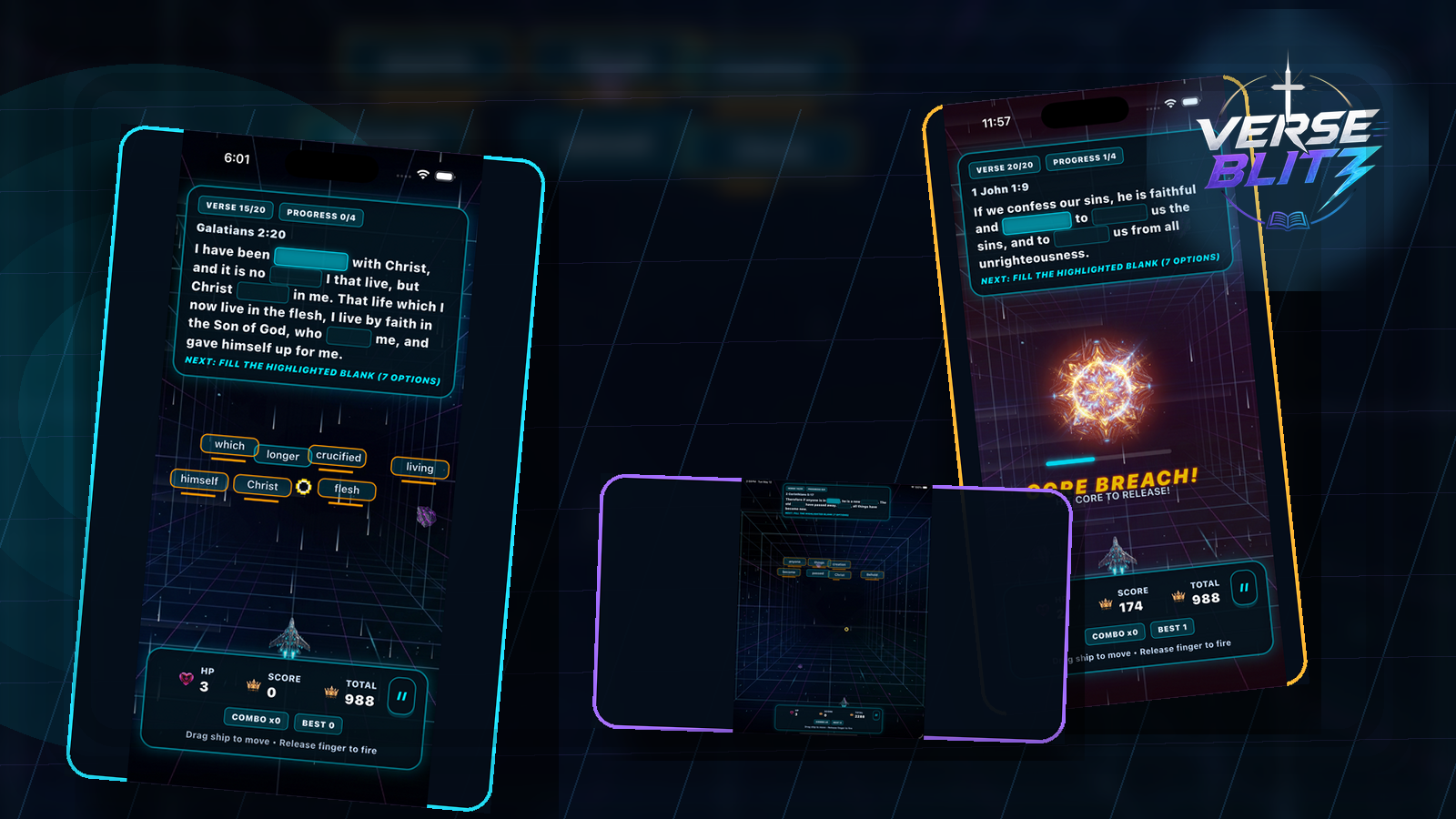
For example, if a verse appears with missing words and several options moving across the screen, you have to identify what belongs next. That is a different experience from glancing at a card, thinking, “I know this verse,” and moving on too quickly.
When Scripture practice asks for real participation, it often becomes easier to remember what you reviewed later.
When a Bible memory game works better than flashcards
Flashcards are simple, and simplicity can be useful. But a Bible memory game can be stronger for people who need more momentum built into the routine.
That is especially true for:
- teens who respond better to interactive practice than static review
- parents looking for a more engaging way to help kids learn memory verses
- adults who want Scripture practice to fit into short moments during the day
- anyone who wants a Christian app that feels less passive
The goal is not to replace Bible reading, prayer, or study. The goal is to support memorization with a format that makes returning to the verse easier.
What to look for in a Scripture memory game
Not every Christian game helps with memorization equally well. If you are searching for the right Bible memory game, a few things matter more than flashy presentation.
Look for a game that offers:
- short rounds you can finish in a few minutes
- clear verse-by-verse progress
- repeated exposure without every session feeling identical
- themed verse collections that give practice more direction
- family-friendly gameplay that still feels polished
Those details make a big difference over time. If the game is easy to start, easy to replay, and built around the verse instead of distractions, it has a better chance of becoming part of your daily rhythm.
Where Verse Blitz fits
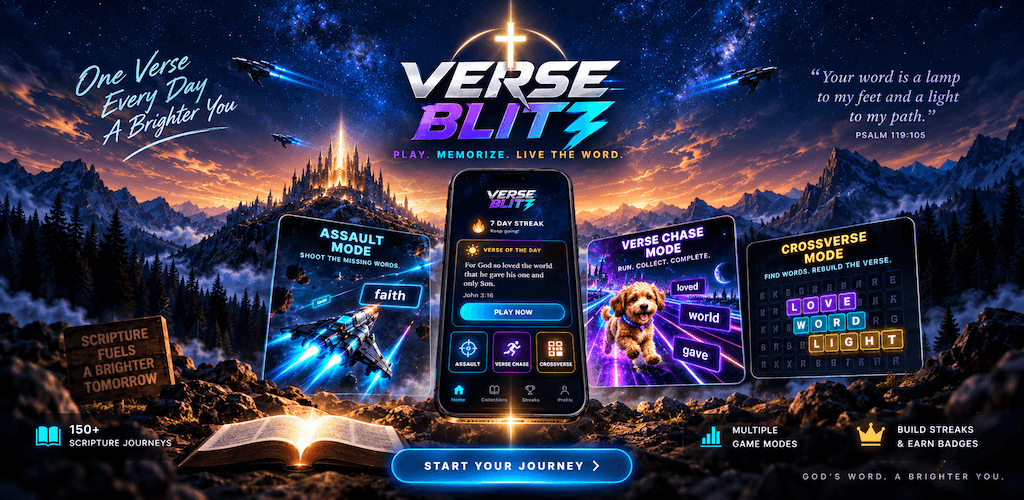
Verse Blitz was built around that exact tension: Scripture memorization matters, but many people struggle to stay consistent when the format feels too passive.
Instead of using a traditional card-style loop, Verse Blitz turns memorizing Bible verses into fast arcade-style rounds. Players work through Scripture by choosing the correct words in order, replaying verses, building streaks, and moving through guided topic-based progression.
That gives the experience a few advantages:
- short sessions are easy to revisit
- replay helps verses feel familiar without feeling stale
- progression, stars, and score give players visible momentum
- later rounds add more variety, which helps the game stay engaging
If you want a broader look at the product itself, read A New Kind of Bible Memory App: Learn Scripture Through Gameplay.
Final thoughts
The best Bible memory system is usually the one you will actually keep using.
For some people, that will still be flashcards. For others, a Bible memory game creates the extra attention, repetition, and momentum needed to keep showing up.
If you have been trying to memorize Bible verses but have struggled to stay consistent, a more interactive format may be worth trying. Verse Blitz was designed for exactly that kind of Scripture practice: active, repeatable, and easier to come back to.